
Home Staging That Sells Faster and for More: Is It Worth the Cost

A buyer does not fall in love with square footage. A buyer reacts to light, space, flow, and the feeling that a home is cared for.
That is the point of home staging. It helps buyers understand a property faster. It can also help a seller protect price, shorten days on market, and stand out against similar homes.

Why staging helps buyers decide faster
Most buyers start with photos. If the photos do not make a clear first impression, the home may never make the showing list.
Staging gives each room a clear purpose. It answers basic questions before a buyer has to ask them.
Can a king bed fit here?
Where would the dining table go?
Is the living room large enough for guests?
Does this awkward corner have a use?
Empty rooms often look smaller than they are. That surprises many sellers. Without furniture, buyers lose scale. They may focus on flaws, not function.
Staged rooms guide the eye. They make traffic flow easier to understand. They also help online photos feel warmer and more complete.
The National Association of Realtors has reported in its Profile of Home Staging that 81% of buyers’ agents said staging made it easier for buyers to visualize a property as a future home. That is a strong reason to stage. Visualization drives action.
The sale price case is real, but not magic
Staging does not change the appraised square footage. It does not fix a bad roof. It cannot turn an overpriced home into a bargain.
What it can do is reduce buyer hesitation.
When a home looks move-in ready, buyers may feel more confident. They may also compare it more favorably against competing homes. That can protect the asking price and, in a strong listing, support better offers.
NAR staging surveys have found that a meaningful share of agents report a price lift for staged homes. Many report increases in the 1% to 5% range compared with similar unstaged homes. Some report higher gains, especially when the property was vacant, dated, or hard to understand.
Here is what that means in practical terms.
Home sale price | 1% lift | 3% lift | 5% lift |
$400,000 | $4,000 | $12,000 | $20,000 |
$600,000 | $6,000 | $18,000 | $30,000 |
$800,000 | $8,000 | $24,000 | $40,000 |
Those numbers are not guaranteed. Market conditions matter. Pricing matters. Location matters. Still, even a small improvement can outweigh the cost of staging.
Staging works best when it supports the right price, strong photography, and a clean listing strategy.
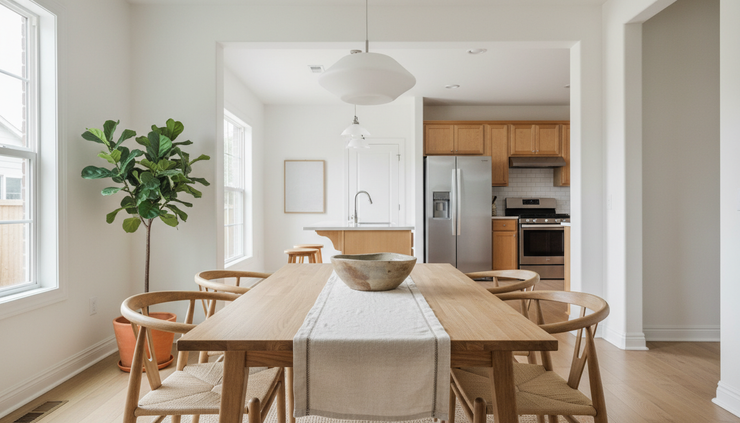
Faster sales can matter as much as price
A higher price gets attention. A faster sale can save money too.
Every extra week on market can add carrying costs. Mortgage payments, insurance, utilities, lawn care, and cleaning all continue. A long listing can also create a perception problem. Buyers may start asking what is wrong with the home.
Staging helps reduce friction. It can make the listing look fresher from day one, when buyer interest is usually highest.
NAR has reported that nearly half of sellers’ agents said staging reduced time on market. That does not mean every staged home sells immediately. It means many agents see staging as a tool that helps buyers act sooner.
A simple case example shows the point.
A vacant three-bedroom home has plain beige walls, no furniture, and a narrow living room. Online, the space looks cold and small. After staging, the living room shows a sofa, two chairs, a rug, and a small media console. The primary bedroom gets a bed, lamps, and simple art. The dining nook gets a round table.
The home did not change. The buyer’s understanding changed.
That can lead to more showings, stronger first impressions, and fewer doubts during the offer stage.
The biggest misconception is that staging is just decorating
Decorating reflects personal taste. Staging is sales preparation.
A good stager does not design for the seller’s style. The goal is to appeal to the likely buyer for that home. A downtown condo may need clean lines and compact furniture. A family home may need a warm living room, a defined dining area, and a calm primary suite.
Another misconception is that staging always means furnishing the whole home. It does not.
Many sellers stage only key spaces:
Living room
Kitchen
Dining area
Primary bedroom
Main bathroom
Entry area
These rooms carry the most emotional weight. They also show up heavily in listing photos.
The last misconception is that staging is too expensive to pay off. It can be expensive. Full staging for a vacant home may cost several thousand dollars, depending on size, market, furniture rental, and time on market.
But staging is not all or nothing.
Some homes need only consultation, decluttering, furniture editing, and light styling. Others need partial staging. The right level depends on the home’s condition and competition.

How to think about cost versus return
Do not judge staging only by the invoice. Compare it with the cost of a price reduction.
A $3,000 staging plan may feel high. But one price cut can be $10,000, $20,000, or more. If staging helps avoid even part of that cut, the return can be strong.
Use this simple test.
Ask what is likely to hurt the sale if the home is not staged.
Empty rooms that photograph poorly
Odd layouts
Oversized furniture
Dark rooms
Strong personal style
Cluttered surfaces
Dated bedding, rugs, or curtains
Unclear room purpose
If several of these apply, staging deserves serious thought.
Sellers should also look at the competition. If nearby homes are polished and photo-ready, an unstaged home may look less valuable even if it has similar features.
For a grounded plan based on your home, timeline, and local market, contact Sarah Lin to discuss your sale strategy.

Tips for homeowners considering staging
Start before photos. Staging after listing means the home has already made its first impression.
Focus on the rooms buyers care about most. If the budget is tight, stage the living room and primary bedroom first.
Declutter hard. Remove extra furniture, countertop items, family photos, and items that make rooms feel busy.
Use neutral colors, but avoid making the home feel bare. Warm textures, plants, lamps, and simple art help.
Fix obvious distractions. Loose handles, stained grout, scuffed walls, and burned-out bulbs can make buyers question maintenance.
Do not overstage. The home should feel livable, not like a furniture showroom.
Ask for photo-focused advice. What works in person may not work in listing photos.
FAQ
Is home staging worth it for an occupied home?
Yes, often. Occupied homes can benefit from furniture editing, decluttering, rearranging, and updated styling. The goal is to make the home feel open and easy to understand.
Should every room be staged?
No. Key rooms matter most. Focus on the living area, kitchen, dining space, primary bedroom, bathrooms, and entry.
How much does home staging cost?
Costs vary by home size, location, and whether the home is vacant or occupied. A consultation may be modest. Full vacant staging can cost several thousand dollars.
Can staging hide problems with a home?
It should not. Staging presents the home well, but repairs and disclosures still matter. Buyers will notice major issues during showings and inspections.
When should staging happen?
Before listing photos. The first online impression is often the most important one.
The takeaway
Staging is not a guaranteed price boost. It is a way to reduce buyer doubt.
A staged home can photograph better, show better, and feel easier to buy. That can lead to stronger offers and fewer days on market. For many sellers, the cost is not the real question. The better question is what an unstaged home might cost them.


Comments